
Our technology
We made clinical-grade neurological measurement possible outside clinical settings.
That is the invention.
Everything else follows from it.
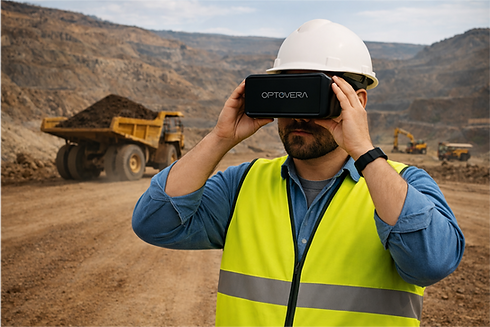
The Scientific Foundation
A signal that neuroscience has studied for decades.
The Pupillary Light Reflex is one of the most studied physiological signals in neuroscience. When light hits the retina, the pupil constricts automatically — a response regulated by the autonomic nervous system, below the threshold of conscious control. It cannot be suppressed, exaggerated, or faked.

What makes the PLR scientifically valuable is not just that it is involuntary — it is that it is informative. Decades of research have established that PLR parameters change measurably when a neurological condition is affected by fatigue, sleep deprivation, stress, medications, or alcohol. How fast the pupil constricts. How much it constricts. How consistently it recovers. These are not random variations — they are neurologically meaningful signals that reflect the actual condition of the person being measured.
Doctors have long used PLR analysis to evaluate patients in hospitals and specialized settings. It is a standard tool in neurology, critical care, and pharmacological research. The science is not new. The application is.

The Invention
The problem was never the science. It was the hardware — and the know-how.
Early attempts to bring PLR measurement outside clinical settings existed, but the devices required were expensive, bulky, and impractical for operational environments. A technology confined to hospitals and specialized practices cannot prevent a workplace accident at the start of a shift.
The question we set out to answer was whether the measurement could be made field-deployable — without sacrificing the accuracy and reliability that made it clinically valuable.
The answer was a smartphone. But not simply a smartphone.
Modern smartphones have the camera resolution, processing power, and portability that PLR measurement requires. What they were not designed to do is make accurate biometric measurements. Consumer cameras are optimized for photography — not for the precise, repeatable capture of physiological signals under controlled conditions. Adapting that hardware for clinical-grade measurement required developing the know-how to extract reliable PLR data from a device built for an entirely different purpose — calibrating the capture parameters, processing the video stream with the precision that neurological measurement demands, and ensuring consistency across different device models, eye colors, and age groups.
The enclosure solved the environmental problem. The controlled lighting, fixed distance, and elimination of ambient variability created the conditions the measurement requires. But the engineering challenge was to make a consumer camera perform as a reliable biometric instrument — that is our know-how.

Actual screen recording

OPTOVERA Testing Device
The result is a measurement that is objective, tamper-resistant, and fully operational in any environment — with or without an internet connection. In a mine. On a loading dock. At the start of a shift.