

Science Background
The eyes are a window into the brain
The pupil's response to light, known as the Pupillary Light Reflex (PLR), is an involuntary reflex regulated by the autonomic nervous system.
Because PLR dynamics are directly linked to central nervous system function, changes in PLR can indicate neurological alterations associated with a compromised neurocognitive state.
What OPTOVERA Scan measures
Scan analyses multiple PLR features, identifying deviations from an individual's baseline that may indicate neurological alterations.

Why our hardware matters
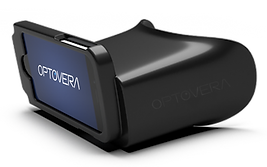
Scan standardizes the conditions needed for reliable pupillary metrics measurement by using an opaque enclosure with a smartphone configured specifically for OPTOVERA.
How it works
A worker completes a short, standardized test in a controlled condition. A smartphone camera records the pupil response under controlled lighting inside the Scan device enclosure.

Built for operations
Designed for the workplace, not lab settings: testing for pre-shift, return-to-work, and high-risk task gating.


OPTOVERA Scan
The most reliable alertness check
In safety-critical work, you need an objective signal—not user effort, interpretation, or late-stage symptoms.
OPTOVERA Scan uses pupillometry to measure the Pupillary Light Reflex (PLR) — an involuntary neurological reflex that cannot be consciously controlled — delivering a tamper-resistant, unbiased indicator of neurological alterations, regardless of underlying cause.
Benefits
-
Objective, consistent result
-
Tamper-resistant by design
-
Cause-agnostic readiness signal
-
Actionable at the point of work
Bottom line: Turn neurocognitive state from a guess into a measurable signal — so teams can act earlier and prevent incidents.
Limitations of Other Approaches


Wearables
Indirect and not designed for impairment detection
Vehicle Camera
Reactive rather than preventive
PVT tools assess alertness by asking users to respond to visual cues, measuring reaction time, and attention lapses. In practice, results depend heavily on engagement and cooperation—making consistency harder to guarantee in operational settings.
Limitations:
-
Requires sustained attention and active participation
-
Results can be affected by motivation, distraction, or intentional behavior
-
Scientifically validated protocols run ~10 minutes; shorter commercial versions often reduce reliability
Bottom line:
PVTs measure task performance, not an involuntary neurological response. This introduces bias and variability—especially problematic in real-world operations.
Wearables track signals such as heart rate, oxygen saturation, and skin temperature. These metrics can be useful for wellness trends but provide only indirect proxies for cognitive readiness.
Limitations:
-
No direct measurement of neurological function
-
Accuracy varies widely by individual and context
-
Continuous wear and syncing are required
-
Limited ability to detect impairment from fatigue, substances, or illness
Bottom line:
Wearables were not built to assess readiness for duty and can offer incomplete or misleading reassurance in safety-critical use cases.
Camera-based systems analyze facial features, eye closure, or head position to detect distraction or drowsiness—often after impairment is already evident.
Limitations:
-
Focus on visual behavior, not neurological readiness
-
Unable to detect substance or illness-related impairment
-
Intervene only once performance is already degraded
Bottom line:
Cameras help identify late-stage symptoms, but they do not provide early, objective insight needed for prevention.